Showing posts with label No onion - no garlic recipes. Show all posts
Showing posts with label No onion - no garlic recipes. Show all posts
When we visited New Zealand this year, we had the opportunity to eat at an ISKCON restaurant. As you may already know, ISKCON restaurants prepare delicious dishes without using onion or garlic. What made this particular restaurant special was that they served only vegan dishes.
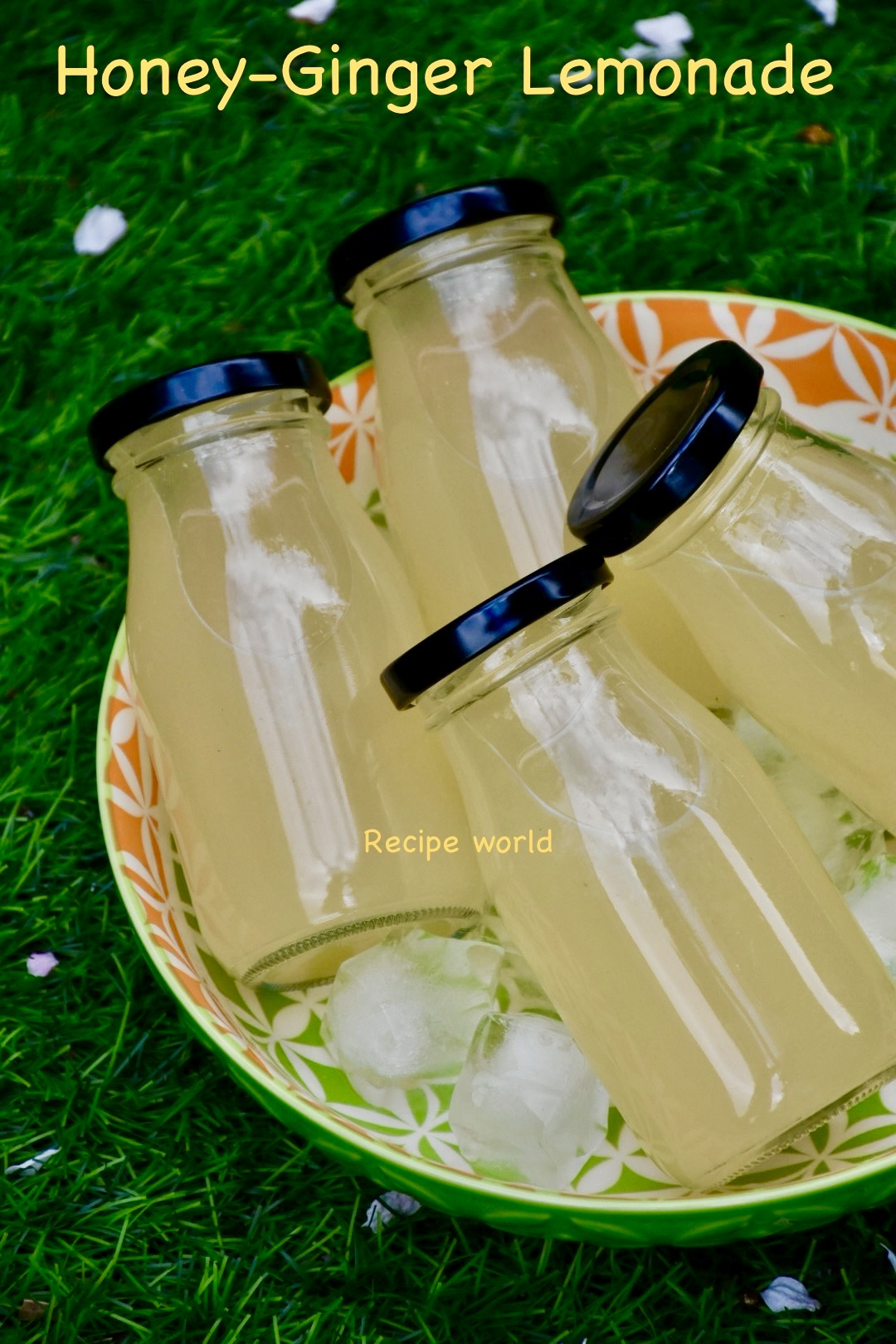
Since we are always on the lookout for vegetarian food wherever we travel, we absolutely loved the food there! But what we enjoyed just as much was the Ginger-Honey Panaka we had along with our meal.
Even after we returned home, we made this drink several times and enjoyed it. When you have a cold or a sore throat, sipping this Panaka slowly can feel especially soothing. This delicious and refreshing drink is also wonderfully simple to make. Do give it a try!
A refreshing, soothing drink made with ginger, honey, and lemon — inspired by one served at an ISKCON restaurant in New Zealand, and just as good as a comfort drink for a cold or sore throat.
10 minPrep time
0 minCook time (no-fire recipe)
5Servings
DrinksCourse
Ingredients
Cold water – about 1 litre
Honey – 10 tablespoons, or to taste
Lemon – 1 or 2 whole, depending on how much juice you get
Fresh ginger – 5 inches
Instructions
Take the cold water in a large vessel. Add 10 tablespoons of honey, or adjust the quantity according to your preferred sweetness. Mix well.
Clean the ginger, peel it if desired, and grate it finely using a grater. Then crush the grated ginger well.
Advertisement
Add 1–2 tablespoons of water to the crushed ginger. Strain this mixture thoroughly and add the ginger juice to the vessel containing the sweetened water.
Add enough lemon juice to give the Panaka a pleasantly tangy taste. Mix everything well.
Pour the chilled Panaka into glasses and enjoy!
Tips
This drink tastes best when consumed fresh.
Advertisement
You might also like
We grow different kinds of vegetables in our backyard every summer. This year, while ordering seeds online, we also found Snap Melon seeds. Hence, after many years, we finally got to enjoy Mekkehannu payasa again! This fruit - also called Ibbudla or Kyakarike Hannu - gives a wonderful taste to the payasa. When it is still unripe, it tastes extremely bitter, but once it ripens and cracks open, it becomes soft and melts in the mouth.
The kids really enjoyed watching this fruit split open on its own, and our little boy even calls it “Hatch melon”!
Here is the recipe for this payasa, which can be prepared using just a few ingredients:
'Tambli' is a yogurt based gravy which is easy to prepare and has the health benefits too. When its summer, one or the other variety of Tambli is very common in Havyaka homes, to serve with rice. Here is a unique Tambli recipe which is prepared using Tindora which is known as 'Tonde Ele' in Kannada.
We had a huge crop of pumpkins this summer. Growing our own veggies during different seasons is not only pocket saver, its stress burster too, in my opinion. It needs a bit of regular maintenance, but seeing the garden brimming with flowers, fruits and veggies, it feels worth the effort.
Pumpkins last upto 6 months if they are harvested after ripening well. We enjoy pumpkin soup every now and then for our dinner during winter nights. Other dish which my family loves is Pumpkin Sambar. This Sambar won't need onion and garlic, its vegan friendly and tastes similar to the Temple style Sambar.
Majjige Huli / Paladya is one of the most common side dish in Havyaka households at my native place. When you are bored of eating same type of Sambar everyday, Majjige Huli makes the lunch or dinner more enjoyable. Different vegetables are used to prepare Majjige Huli. When made using every different vegetable, taste of this side dish varies. Also, we can make both sweet and savoury version of Majjige Huli with every vegetable!
During our recent visit to Sydney, one of our family friends had kindly shared some home-grown Tondekayi / Dondakaya with us. It was long time since I prepared Majjige Huli using Tindora. We all enjoyed this sweet version of Tindora Majjige Huli, and here is the recipe for you all to try!
Just like every year, our summer veggie patch is on full bloom this year too. When there are so much home grown veggies, its very hard to choose the veggies for your cooking, when you don't want anything go waste! We are making a good use of home grown veggies in our daily cooking, sharing some with friends and also, preserving some in the freezer for the winter months.
A few of our white radish plants grew up taller, they didn't produce any bulbs, but we could see big bunches of radish beans on the plant. Then, I got to know from one of my friends that, radish beans are good for cooking curries and stir fries. I tried my hands on making 2 - 3 varieties of stir fry (Palya), and here is the one which was liked by all..
Preparation time: 25 - 30 minutes
Difficulty level: Medium
Serves - 5
Ingredients:
Radish / Muli beans - about 3 cups
Salt - to taste
Sugar - 1 tsp
Amchur powder - 3/4 tsp
- For Seasoning: cooking oil - 3 tbsp, Urid dal - 1 tsp, Mustard seeds - 1 tsp, Turmeric - a pinch
Wash the beans in water, take off the stem and the pointy ends of the beans. Chop them roughly or just break each of them into 2 - 3 pieces using your hand. I had around 2 cups of chopped beans after cleaning and taking off the stem and pointy ends.
Next step is to prepare the Masala powder; Heat 2 tsp of oil in a heavy bottom pan. Add cinnamon piece, red chilli pieces and split chana dal, toast them for 1 - 2 minutes. Then add urid dal, methi seeds and clove. Stir it for half a minute and add coriander seeds, cumin seeds, mustard seeds and a pinch of hing. Toast them all till the mustard seeds start crackling. Finally add 1/4 tsp of turmeric powder and turn off the flame.
Transfer the toasted spices into the mixie jar after they cool down a bit. Run the mixie a few times on whip / pulse mode to make a course powder. Let it be like semolina, not too course. Add the shredded coconut at the end and pulse it for a few more seconds to make everything evenly course.
Heat 3 tbsp of oil in the sam heavy bottom pan for the seasoning. Add urid dal, mustard seeds. Once the mustard seeds start crackling, add a pinch of turmeric powder and chopped radish beans. Give it a good mix and sauté the mixture for 2 minutes. Then, close the lid and allow it to cook on medium flame.
When the mixture is half - way cooked, add salt to taste, 1 tsp sugar and 3/4 tsp of amchur powder. Combine it well, and close the lid to cook further. Keep mixing it every few minutes. No need to add any extra water, as the water content in the beans would be sufficient to cook them.
It would take around 12 - 15 minutes to cook the beans mixture. Once its cooked well, add the prepared masala powder and combine everything well Cook it for 2 - 3 minutes more and turn off the flame.
Serve this tasty Palya along with rice or chapathi!
Hi, I’m Vani — a passionate home cook, recipe creator, and food lover. I enjoy exploring new dishes from cookbooks, magazines, cooking shows, and fellow food bloggers. My love for cooking — and for capturing those delicious moments — inspired me to start this blog. Many of the recipes you’ll find here come from my mother, mother‑in‑law, and the traditional flavors I grew up with. I especially cherish authentic Havyaka and South Indian recipes, and this space helps me preserve and share them with anyone who wants to bring those homely, comforting tastes into their kitchen. Whether you’re trying a simple everyday dish or exploring something new, I hope my step‑by‑step recipes make your cooking experience enjoyable and easy.